Download the leaflet (PDF) 1.0 MB.
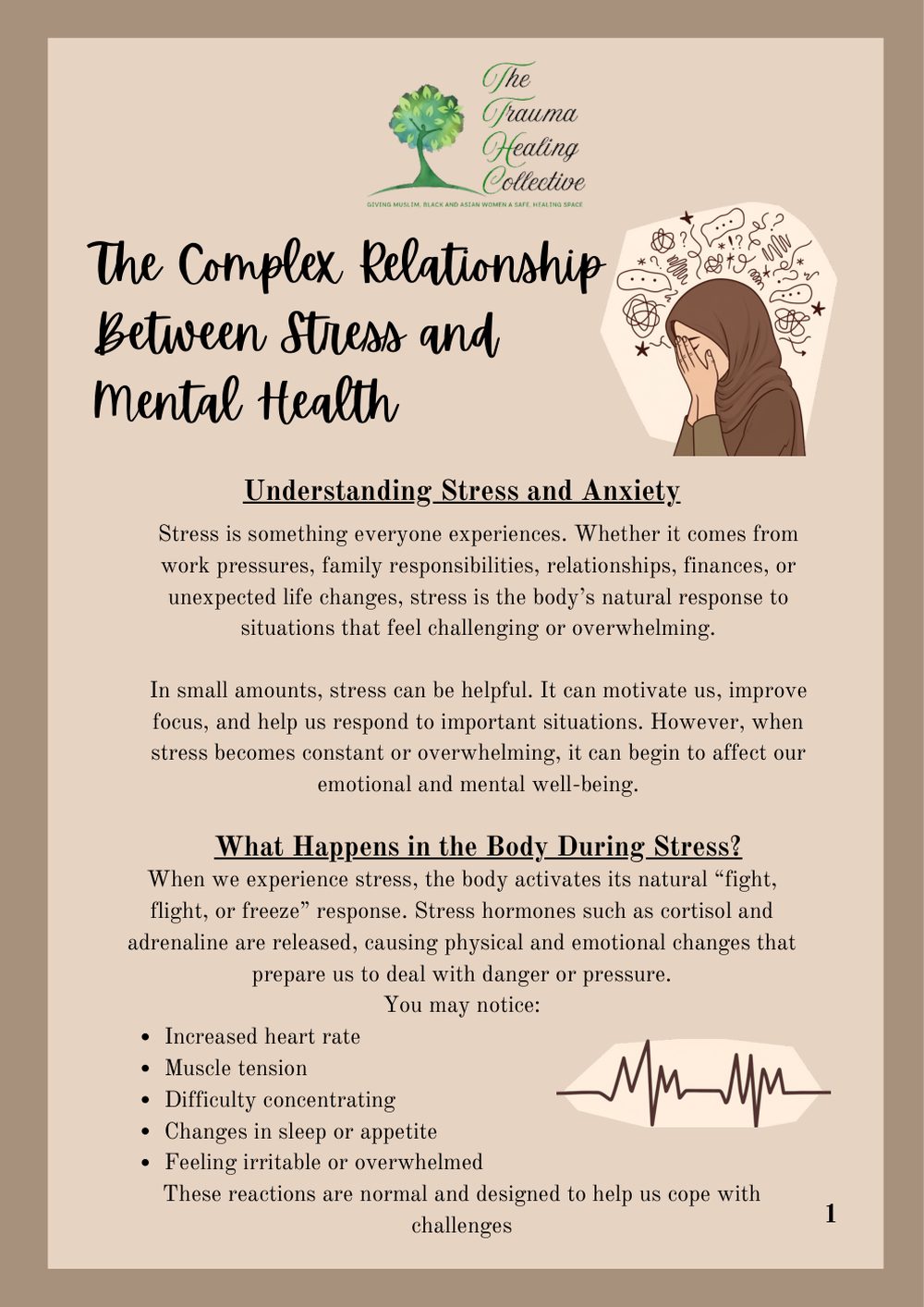
Understanding Stress and Anxiety
Stress is something everyone experiences. Whether it comes from work pressures, family responsibilities, relationships, finances, or unexpected life changes, stress is the body’s natural response to situations that feel challenging or overwhelming.
In small amounts, stress can be helpful. It can motivate us, improve focus, and help us respond to important situations. However, when stress becomes constant or overwhelming, it can begin to affect our emotional and mental well-being.
What Happens in the Body During Stress?
When we experience stress, the body activates its natural “fight, flight, or freeze” response. Stress hormones such as cortisol and adrenaline are released, causing physical and emotional changes that prepare us to deal with danger or pressure.
You may notice:
- Increased heart rate
- Muscle tension
- Difficulty concentrating
- Changes in sleep or appetite
- Feeling irritable or overwhelmed
These reactions are normal and designed to help us cope with challenges
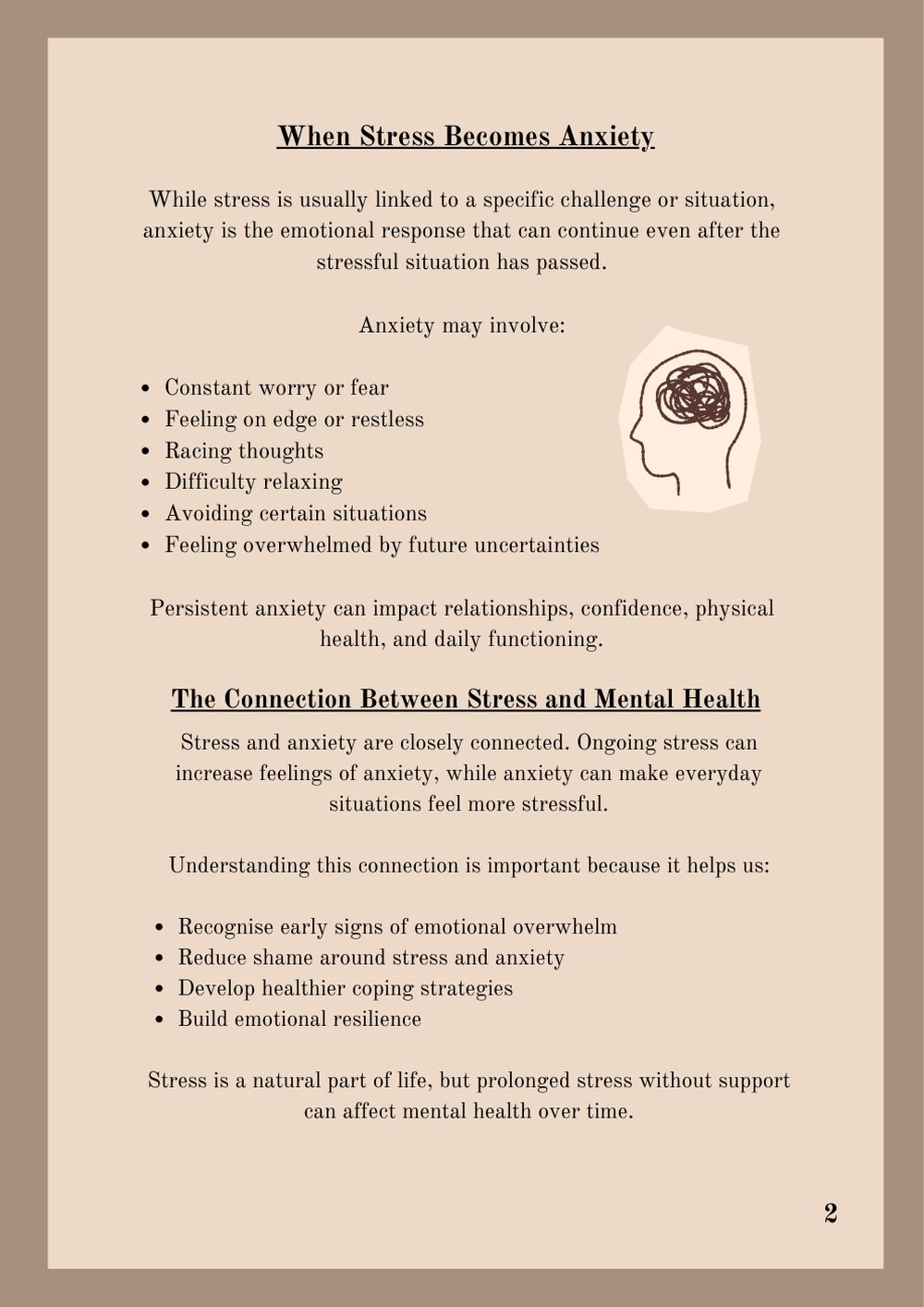
When Stress Becomes Anxiety
While stress is usually linked to a specific challenge or situation, anxiety is the emotional response that can continue even after the stressful situation has passed.
Anxiety may involve:
- Constant worry or fear
- Feeling on edge or restless
- Racing thoughts
- Difficulty relaxing
- Avoiding certain situations
- Feeling overwhelmed by future uncertainties
Persistent anxiety can impact relationships, confidence, physical health, and daily functioning.
The Connection Between Stress and Mental Health
Stress and anxiety are closely connected. Ongoing stress can increase feelings of anxiety, while anxiety can make everyday situations feel more stressful.
Understanding this connection is important because it helps us:
- Recognise early signs of emotional overwhelm
- Reduce shame around stress and anxiety
- Develop healthier coping strategies
- Build emotional resilience
Stress is a natural part of life, but prolonged stress without support can affect mental health over time.
Practical Ways to Support Mental Well-Being
Healthy Coping Strategies
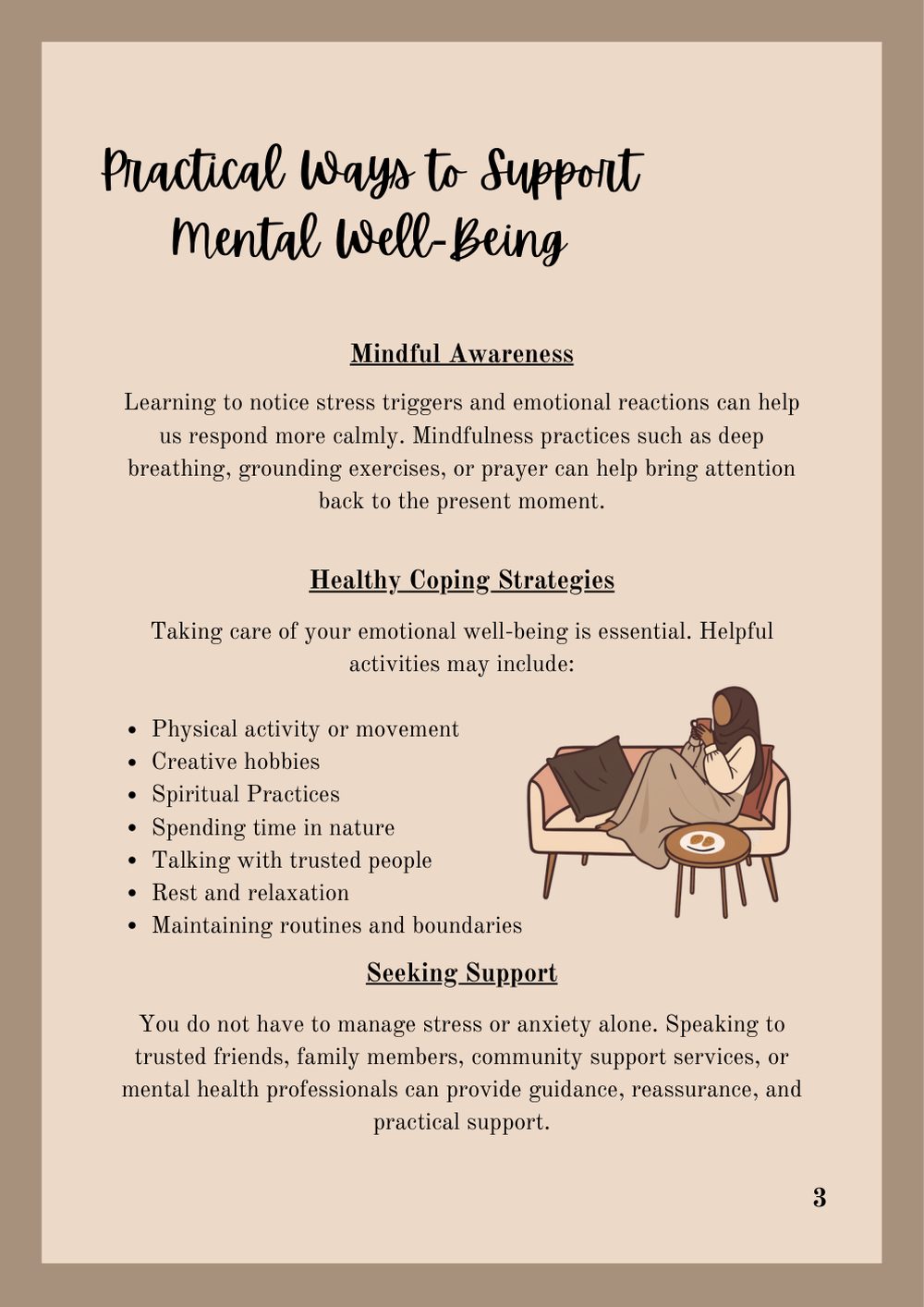
Taking care of your emotional well-being is essential. Helpful activities may include:
- Physical activity or movement
- Creative hobbies
- Spiritual Practices
- Spending time in nature
- Talking with trusted people
- Rest and relaxation
- Maintaining routines and boundaries
Mindful Awareness
Learning to notice stress triggers and emotional reactions can help us respond more calmly. Mindfulness practices such as deep breathing, grounding exercises, or prayer can help bring attention back to the present moment.
Seeking Support
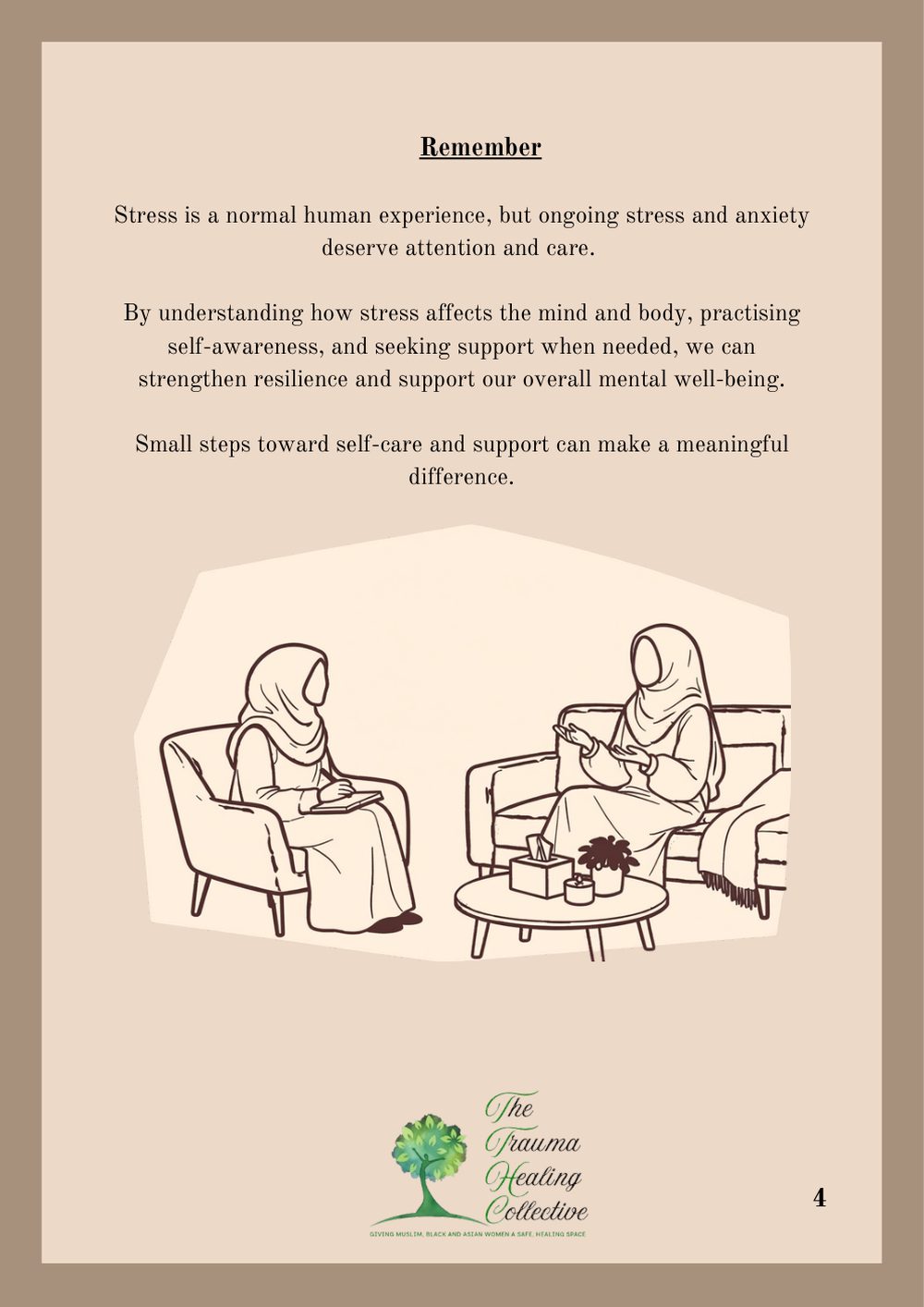
You do not have to manage stress or anxiety alone. Speaking to trusted friends, family members, community support services, or mental health professionals can provide guidance, reassurance, and practical support.
Remember
Stress is a normal human experience, but ongoing stress and anxiety deserve attention and care.
By understanding how stress affects the mind and body, practising self-awareness, and seeking support when needed, we can strengthen resilience and support our overall mental well-being.
Small steps toward self-care and support can make a meaningful difference.
See the original leaflet pages
Would you like to share your own story, anonymously if you prefer? Email amatullah.salmon@