Download the leaflet (PDF) 0.6 MB.
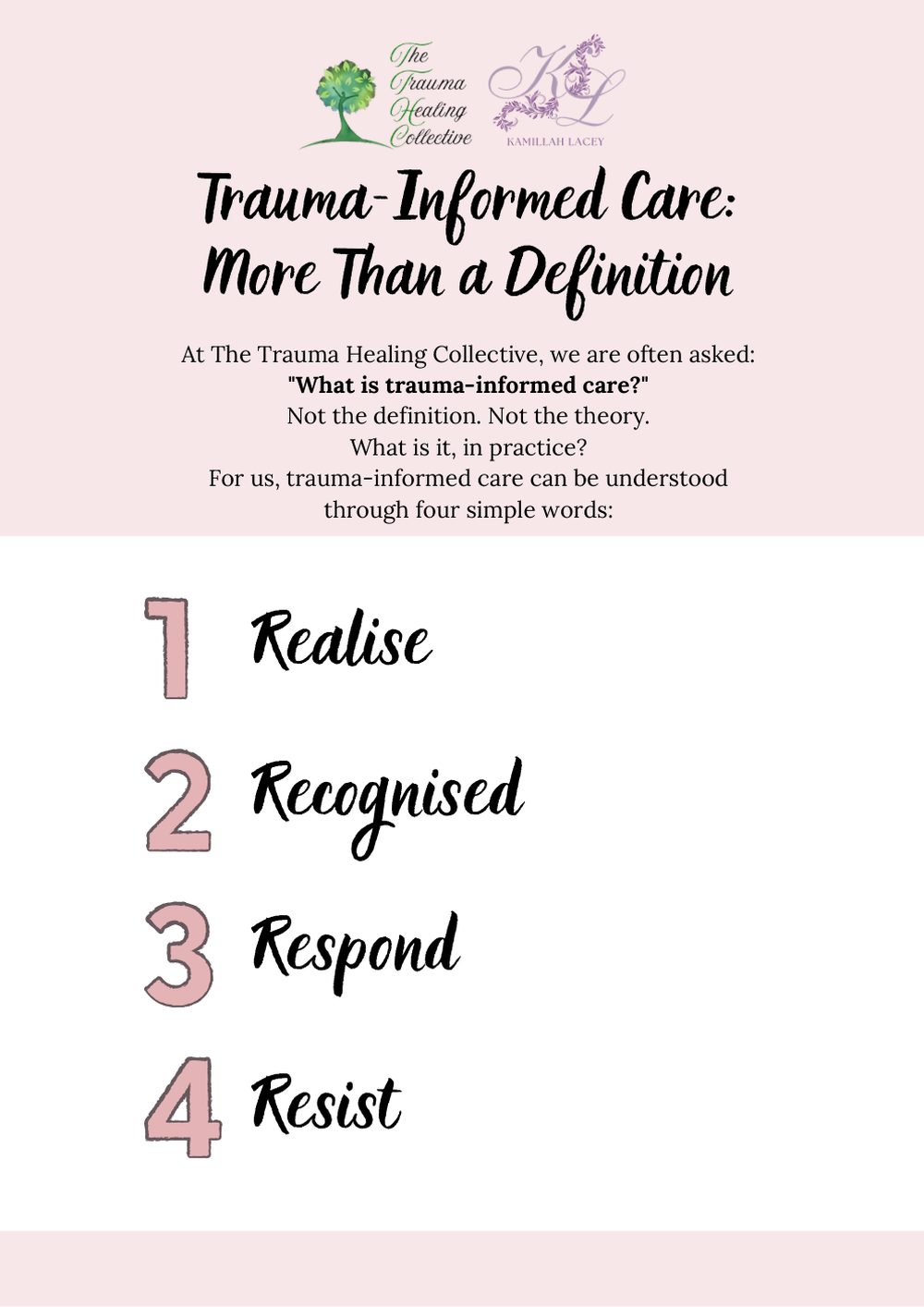
At The Trauma Healing Collective, we are often asked:
“What is trauma-informed care?”
Not the definition. Not the theory.
What is it, in practice?
For us, trauma-informed care can be understood through four simple words:
- Realise
- Recognised
- Respond
- Resist
1. Realise
Trauma is more common than many people think.
It is present in our communities, our families, our workplaces, and often in the stories people carry without ever speaking them aloud. Trauma does not always arrive with a clear explanation. It can live in the nervous system, in patterns of behaviour, in emotional reactions, and in the body’s response to stress.
It may appear in the silence before an answer, the difficulty trusting others, or the way someone braces themselves when entering a room.
Realisation is the foundation of trauma-informed care.
We cannot recognise trauma if we have not first accepted that it exists and that it may be affecting the people we work with, support, and care for.
2. Recognise
Once we understand that trauma is widespread, we can begin to recognise how it shows up.
Trauma does not always present itself as a disclosed experience. More often, it reveals itself through behaviours, emotional responses, physical symptoms, and recurring patterns.
In behaviour
- Withdrawal
- Anger
- Avoidance
- Difficulty engaging
- Emotional shutdown
These are often signs of distress rather than character flaws.
In the body
- Hypervigilance
- Chronic tension
- Fatigue
- Dissociation
- Heightened stress responses
The body often carries what words cannot express.
In patterns
When the same difficulties, reactions, or challenges continue to repeat, it may indicate unresolved experiences rather than a lack of motivation or willingness.
Recognising trauma requires curiosity, compassion, and a willingness to look beyond surface behaviours.
3. Respond
Trauma-informed care is not simply about understanding trauma.
It is about responding in ways that promote healing rather than causing further harm.
A trauma-informed response prioritises:
Safety before disclosure
People should never feel pressured to share their experiences before they are ready.
Choice before compliance
Where possible, individuals should have meaningful options and a sense of control.
Connection before correction
Relationships and trust create the conditions for growth and change.
Presence before protocol
Policies matter, but human connection matters too.
Responding in a trauma-informed way requires us to:
- Slow down
- Listen deeply
- Check our assumptions
- Remain curious
- Stay emotionally regulated
- Create environments where people feel seen, heard, and respected
4. Resist
The final step is to resist the systems, practices, and habits that unintentionally recreate harm.
This means challenging approaches that rely solely on control, judgement, punishment, or compliance.
It means asking:
- “What happened to this person?” rather than “What’s wrong with this person?”
- “How can we create safety?” rather than “How can we gain control?”
- “How can we support healing?” rather than “How can we manage behaviour?”
Resisting harmful practices requires courage, reflection, and a commitment to doing things differently.
See the original leaflet pages
Would you like to share your own story, anonymously if you prefer? Email amatullah.salmon@