Leave this siteEsc Esc

Get support

Support for women and girls

Free and confidential. Start with a 30-minute call and we'll help you choose.

In danger right now? Call 999 or go to Help now.

Is this for me?

Our support is for women and girls affected by:

  • Trauma from any time in your life
  • Domestic abuse
  • Sexual abuse
  • Anxiety, low mood or feeling overwhelmed
  • Something that doesn't feel right, even if you're not sure what it is

You don't need a diagnosis, and you don't need to be ready to talk about everything.

Not sure if we're right for you? Ask us on the free call.

Book a free call

What help is there?

It all starts with a free 30-minute call. Then you choose what feels right.

Free support

  • One-to-one sessions

    • 45 minutes
    • Free

    Private holistic therapy sessions with a practitioner who understands your culture and faith. You set the pace.

    More about one-to-one sessions

    Experience tailored support in a safe and confidential environment. Our trained professionals are here to listen and guide you.

    Please note this is subject to conditions. Residents outside of Luton are required to pay for services. We do however offer subsidised rate which are also subject to conditions.

  • Group sessions

    • Online or in person
    • Free

    Small, welcoming groups where women and girls learn, connect and build skills. No pressure to share.

    More about group sessions

    Our group workshops and programmes provide safe, welcoming and trauma-informed spaces where women and girls can learn, connect and build practical skills to support their wellbeing.

    We offer a variety of workshops, courses and support groups covering different areas of wellbeing.

    Sessions combine accessible information, practical tools, reflective activities and supportive discussion, with no pressure to share personal experiences. Workshops are available online and face-to-face.

  • Healing and Recovery Support Group

    • Monthly, online
    • 90 minutes
    • Free

    An online group on the third Thursday of every month, 10am to 11.30am, for women who have experienced domestic abuse or trauma.

    More about the support group

    Join our monthly online support group for women who have experienced domestic abuse, trauma and are on their journey of healing and recovery.

    Whether you are at the beginning of your healing journey or further along the path, you are welcome to attend and participate at your own pace.

    When: the third Thursday of every month, 10am to 11.30am. Where: online, via Zoom. Cost: free.

    Register on Eventbrite

Free workshops

  • Understanding Mental Health

    • 90 minutes
    • Free

    Learn about mental health, the signs someone may be struggling, and simple ways to help.

    More about this workshop

    Join us for this free Understanding Mental Health workshop, designed to help you develop a better understanding of mental health and emotional wellbeing. We'll explore common mental health difficulties, factors that can affect our wellbeing, signs that someone may be struggling, and practical ways to support ourselves and others.

    A welcoming, informative and non-judgemental space to learn, reflect and build confidence in talking about mental health.

  • Understanding Boundaries

    • 90 minutes
    • Free

    What boundaries are, why they matter, and how to set them in a way that feels safe.

    More about this workshop

    This workshop explores what boundaries are, why they matter, and how they support our emotional wellbeing, relationships and sense of safety. For some people, setting boundaries may feel relatively straightforward. For others, particularly those who have experienced trauma, abuse, controlling relationships, or situations where their choices, needs and feelings were repeatedly ignored, boundaries can feel unfamiliar, uncomfortable or even frightening.

    Together, we will explore how our past experiences can shape the way we understand and respond to boundaries, while developing practical ways to recognise our needs, communicate limits and build healthier, safer relationships.

Courses

  • Healing from Anxiety

    • 6 weeks

    Understand anxiety and learn practical ways to feel calmer and more in control.

    More about this course

    Our 6-Week Anxiety Management Programme provides a supportive, trauma-informed space to help you understand anxiety and develop practical ways to manage it.

    Explore how anxiety affects the mind and body, recognise your triggers and responses, and learn evidence-informed strategies to build calm, confidence, resilience and emotional wellbeing.

    Through practical tools, guided reflection and supportive learning, the programme helps you develop skills you can use in everyday life to feel more in control and better equipped to manage anxiety.

    1. Week 1Understanding Anxiety & Building Awareness
    2. Week 2Window of Tolerance & Dysregulation
    3. Week 3Regulation and Co-regulation
    4. Week 4Exploring Hyper- and Hypoarousal States
    5. Week 5Mitigating Effects of Hyper/Hypoarousal
    6. Week 6Moving Forward
  • Emotional Stabilisation

    • 6 weeks

    Understand trauma and learn gentle ways to cope. Helpful if you are waiting for therapy.

    More about this course

    This supportive six-week course is designed to help you better understand trauma, develop practical coping strategies, and build emotional resilience in a safe and educational environment.

    Whether you are currently awaiting therapy, looking to improve your mental wellbeing, or simply wanting to understand yourself better, this course offers practical tools and gentle guidance to support your wellbeing journey.

    Led by Farhia Abdirizaq and Kamillah Lacey.

    1. Week 1Understanding Trauma - Impact, Meaning, and Coping
    2. Week 2Trauma Stabilisation - Managing Difficult Thoughts
    3. Week 3Noticing Our Emotions
    4. Week 4Self-Compassion After Trauma - Building Kindness, Values, and Direction
    5. Week 5Distancing and Distraction
    6. Week 6Whole-Person Wellbeing - Practical Tools for Everyday Life
  • Domestic Abuse Recovery Toolkit

    • 12 weeks
    • Group

    A group programme to help you understand, reflect and recover after domestic abuse.

    More about this programme

    The Domestic Abuse Recovery Toolkit is a 12-week groupwork programme designed to support understanding, reflection and recovery following experiences of domestic abuse.

    Grounded in a trauma-informed, strengths-based approach, the programme explores the impact of abuse and the ways individuals may develop survival strategies that helped them cope at the time but can sometimes make moving forward more difficult. Alongside this, we focus on existing strengths, coping skills and resilience to support longer-term emotional wellbeing and healing.

    The programme offers a safe, respectful and collaborative space for learning and reflection, recognising the value of knowledge in helping individuals make sense of their experiences and supporting self-compassion and empowerment.

    Led by Amatullah Salmon.

  • Moving On After Trauma (MOAT)

    • 6 weeks

    A six-week trauma recovery programme. Understand how trauma may still be affecting you, and build practical ways to recover.

    More about this programme

    The programme supports participants to understand how trauma may continue to affect their emotions, body, thoughts, relationships and sense of self, while developing practical strategies for recovery.

    By the end of the six weeks, participants should be better able to recognise trauma responses, regulate difficult emotions, challenge unhelpful trauma-related beliefs, understand triggers and patterns, establish healthier boundaries, reconnect with identity and strengths, and develop a realistic plan for continuing their recovery.

    1. Week 1Understanding Where I Am Now
    2. Week 2Feeling Safer in My Body
    3. Week 3Triggers, Thoughts and Emotional Flashbacks
    4. Week 4Shame, Self-Blame and Self-Compassion
    5. Week 5Relationships, Trust and Boundaries
    6. Week 6Reclaiming My Life and Moving Forward

More ways to get involved

  • Becoming a Befriender

    • Training
    • Free

    Training to become a befriender: someone who offers friendly, listening support.

How does healing work?

In three stages. You move through them at your own pace.

  1. Exploration

    Understand what trauma is, and how it has affected your body and your life.

  2. Healing

    Learn how the body holds memories, even ones you can't put into words.

  3. Integration

    Use the tools you've learned to keep healing on your own.

Where do I go?

Victory House in Luton. Sessions last 45 minutes, and you need to book first.

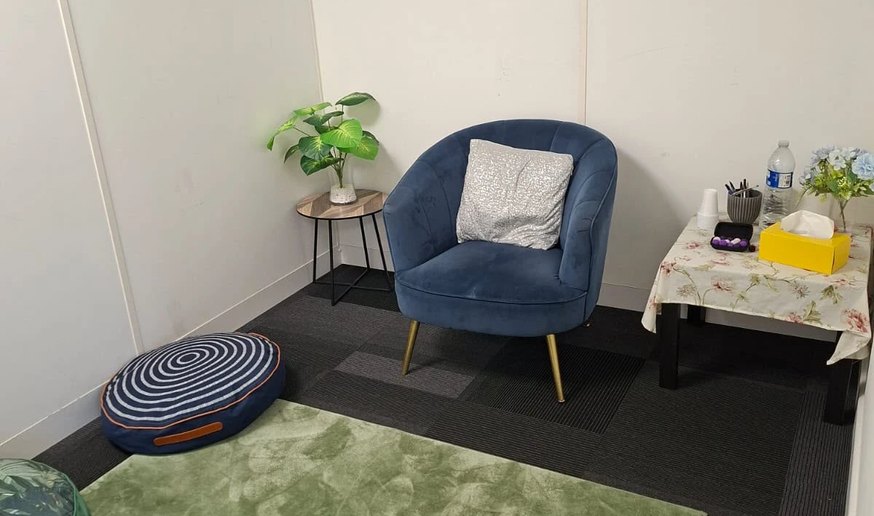
Our room: a blue velvet armchair with a cushion, a green rug with floor cushions, a plant on a side table, and a small table with tissues and flowers.
A room we use for sessions.

Victory House

Holistic therapy sessions (they care for the whole person) and workshops for women and girls.

Open in maps
Address
Chobham St, Luton LU1 3BS
Sessions
45 minutes. Please book first.
Cost
Free. Please note this is subject to conditions. Residents outside of Luton are required to pay for services. We do however offer subsidised rate which are also subject to conditions.
To book
07851 679 883

Questions you might have

Something else on your mind? Ask us on the free call, or call or WhatsApp 07568 299 554.

Is it really free?

Our 30-minute call, group sessions, our monthly support group, Becoming a Befriender and our free workshops cost nothing.

One-to-one holistic therapy sessions are free. Please note this is subject to conditions. Residents outside of Luton are required to pay for services. We do however offer subsidised rate which are also subject to conditions.

Do I have to be Muslim?

Our support is designed by and for Muslim, Black and Asian women and girls. If you're not sure it's right for you, ask us on the free call.

Will anyone know I contacted you?

What you share with us is confidential. We never leave voicemails that mention trauma or the Collective, unless you tell us it's safe.

If a call isn't safe, ask us to message you instead.

Do I need a referral?

No. You can contact us yourself. Family members and professionals can also refer someone to us.

What if I book a free place and can't come?

Please tell us as soon as you can, so we can offer your place to someone else. This is our booking policy, in our own words:

At TTHC, we work extremely hard to secure funding and contribute many voluntary hours to provide free workshops and courses for our community in Luton.

Unfortunately, due to a significant increase in non-attendance and last-minute cancellations, we have had to review our booking policy. Moving forward, individuals who book a place on a free workshop or course and then do not attend, or fail to inform us that they can no longer attend, will not be offered places on future free workshops or courses.

As a charity/community organisation, every funded place represents a valuable opportunity that could have been offered to someone else. We kindly ask that if your circumstances change, you let us know as soon as possible so that we can offer your place to another participant.

Thank you for your understanding and support in helping us continue to provide free services to those who need them.

What languages do you speak?

Our team speaks English, Urdu, Punjabi, Pahari and Somali.

What if I'm in danger right now?

Call 999. If you can't speak, call 999 and press 55 when asked (on a mobile).

We are not an emergency service. Our Help now page lists more helplines.

Worried about someone?

You can help a friend, relative or client get support. Here's how.

  1. Talk to them first, if it's safe

    Ask if they would like support. It's their choice.

  2. Then get in touch with us

    Call or WhatsApp us, or send us the referral form. It's on our previous website for now.

One-to-one holistic therapy sessions are free. Please note this is subject to conditions. Residents outside of Luton are required to pay for services. We do however offer subsidised rate which are also subject to conditions. Ask us about the subsidy form.

When you're ready

One small step:
a free 30-minute call.

No pressure. Share only what you want to.